
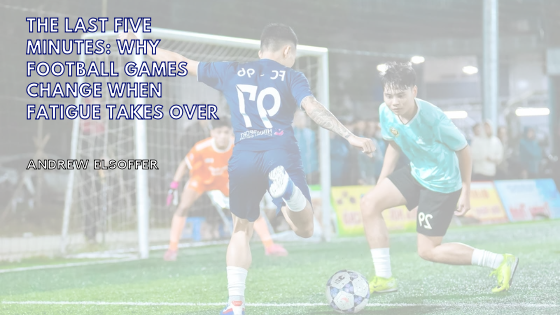
Football matches can be unpredictable, but some of the most dramatic moments happen during the final five minutes. A team that has defended perfectly for most of the game can suddenly concede a goal, while a tired player can produce a brilliant finish that changes everything. These moments are not always about luck. Often, they are the result of fatigue, pressure, and split-second decisions.
When the Body Starts to Slow Down
Football demands constant movement, including sprinting, tackling, jumping, and changing direction. After nearly 90 minutes of intense activity, players naturally begin to feel exhausted. Their legs become heavier, their speed decreases, and even simple movements require more effort.
As fatigue increases, defenders may struggle to keep up with fast attackers. Midfielders may find it harder to track opponents, while forwards might lose the energy needed to make dangerous runs. A small delay in movement can create enough space for an opponent to score.
In the final minutes, even a slight physical disadvantage can make a major difference.
Small Mistakes Can Change Everything
When players become tired, maintaining concentration becomes more difficult. A defender might misjudge a pass, a goalkeeper might react a fraction of a second too late, or a midfielder might give the ball away under pressure.
Earlier in the match, teammates may have enough energy to recover from these mistakes. Near the final whistle, however, tired legs can make recovery much harder.
This is why late goals often follow missed tackles, poor clearances, misplaced passes, or gaps in defensive organization. One small mistake can turn a comfortable lead into a stressful finish.
The Mental Battle of the Final Minutes
Physical exhaustion is only part of the story. The final minutes also create an intense psychological challenge.
A team protecting a narrow lead may become nervous and focus too much on defending. Players might stop pressing confidently, retreat too deeply, or clear the ball without looking for a teammate. Meanwhile, the team chasing an equalizer often becomes more aggressive because it has little time left.
This difference in mindset can change the entire rhythm of a match. The leading team may lose control, allowing its opponents to attack repeatedly.
Confidence, communication, and composure become especially important when every second matters.
Why Substitutions and Tactics Matter
Smart substitutions can make a huge difference in the closing stages. A fresh winger can exploit tired defenders, while an energetic midfielder can help regain possession and protect a lead.
Managers also adjust their tactics depending on the situation. A team chasing a goal may send more players forward, use crosses into the penalty area, and take greater risks. A team protecting its advantage may bring on defensive players or focus on keeping possession.
However, these decisions involve risks. Attacking aggressively can leave spaces at the back, while defending too deeply can invite constant pressure. The best teams understand when to attack, when to slow the game down, and how to manage their remaining energy.
Preparation Makes the Difference
Late-game performance begins long before kickoff. Fitness training helps players maintain their intensity for longer periods, while proper nutrition, hydration, recovery, and sleep support physical performance.
Teams also practise situations in which they must defend a lead or chase a late goal. These exercises help players make better decisions under pressure and communicate effectively when exhaustion sets in.
Although fatigue affects every team, preparation can help players manage it more successfully.
Conclusion: Every Second Counts
The last five minutes of a football match reveal the importance of more than talent alone. Physical fitness, mental strength, tactical awareness, and teamwork all influence what happens when players are exhausted.
A single sprint, a well-timed substitution, or a calm decision can determine the final result. That is what makes football so exciting: even after 85 minutes, the story is not finished.
When the clock is running down and the pressure reaches its peak, the team that manages fatigue and stays focused may be the one that celebrates at the final whistle.